Serengeti Great Migration River Crossings
I was in Tanzania in September and it was a time period that I specifically scheduled for my African safari. If I didn’t get a booking around this time, I would have chosen to wait for another year just to come here rather than travel to Africa during another part of the year. The reason I was sticking to this part of the year was because I wanted to see the Great Migration of the Serengeti.
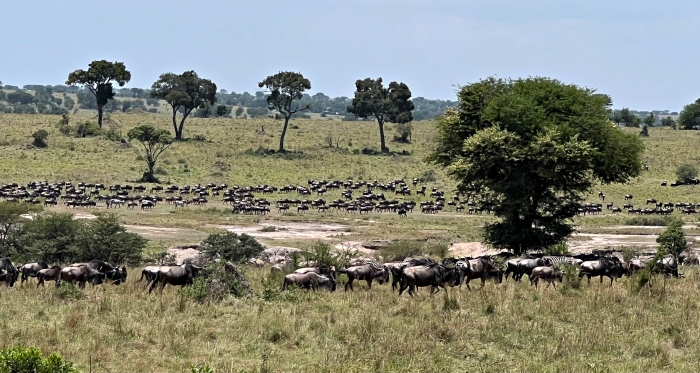
The Serengeti Nation Park is huge enough that different parts of it is affected by season. Each year, masses of wildebeest (or gnu) and zebras migrate from the southern region of the Serengeti during the dry season up north to greener pastures. They end up in the northern Serengeti region and often into Kenya. They return back south for the rainy season when grass becomes green again.
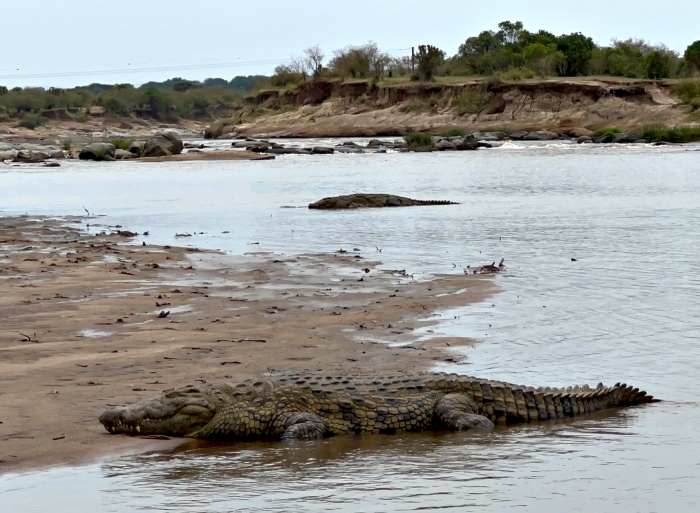
Unfortunately for the migrating wildlife that make this long trek year after year, there are a few rivers that must be crossed in order to go further north and hungry crocodiles wait for them in the water. The wildebeest and zebras are fully aware of these predators in the river which is why they often hesitate to cross when they reach the river edge. They can be so indecisive that they would often climb back up the slope to venture to another part of the river only to hesitate again at the river edge there. This cycle of going down to a river edge and then retreating back up the slope to do the same thing over and over again somewhere else along the river can last for hours.
Meanwhile there are sections of the river that are quite shallow even with large rocks that can be used as stepping stones that they don’t bother using to cross. I saw several of such shallower river sections that would have been much easier for them to cross. This made me conclude that wildebeest are not very intelligent animals.
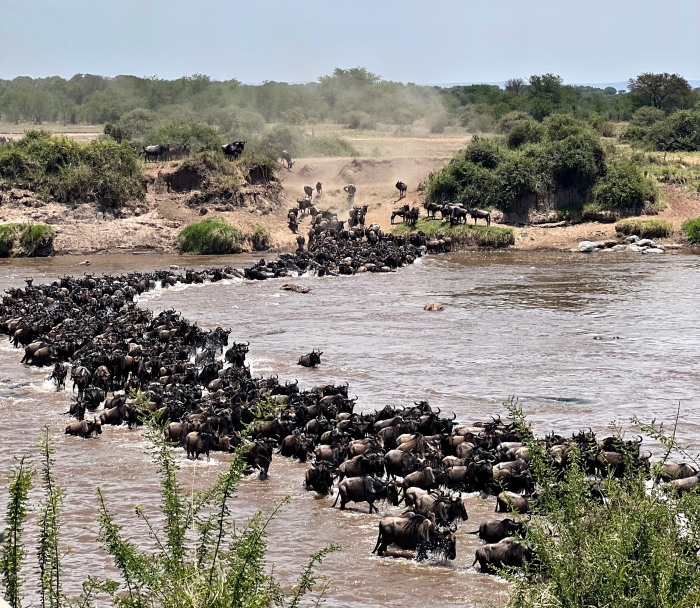
Eventually, one brave soul will finally decide to enter the water and start crossing the river. Others will then join in which will start the river crossings of the Great Migration. Witnessing such river crossings was one of my main objectives during my safari here. One can easily now see why such river crossings would be a feast for the crocodiles waiting in the rivers. Although it might not be pleasant to see a wildebeest or zebra get taken down by a crocodile, it is nature happening in full drama.
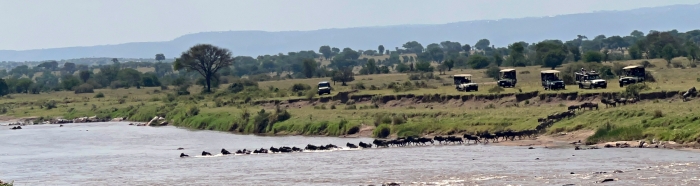
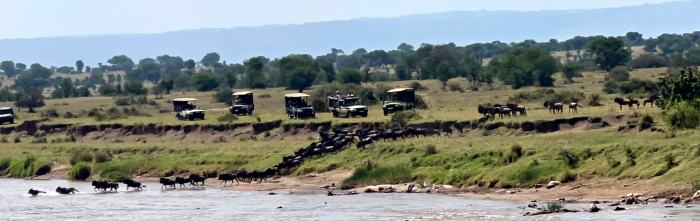
I ended up seeing two river crossing of wildebeest (without any zebras crossing) and they were at different sections of a river over two days in the north Serengeti. I also saw an aborted crossing where all of the animals turned and retreated back up the slope. At times there were disorderly bottlenecks when the wildebeest all tried to run back up slopes with some of them slipping or getting pushed back down. After witnessing both the successful crossings as well as the aborted one, I can honestly say that these are the most chaotic scenes I’ve ever seen.
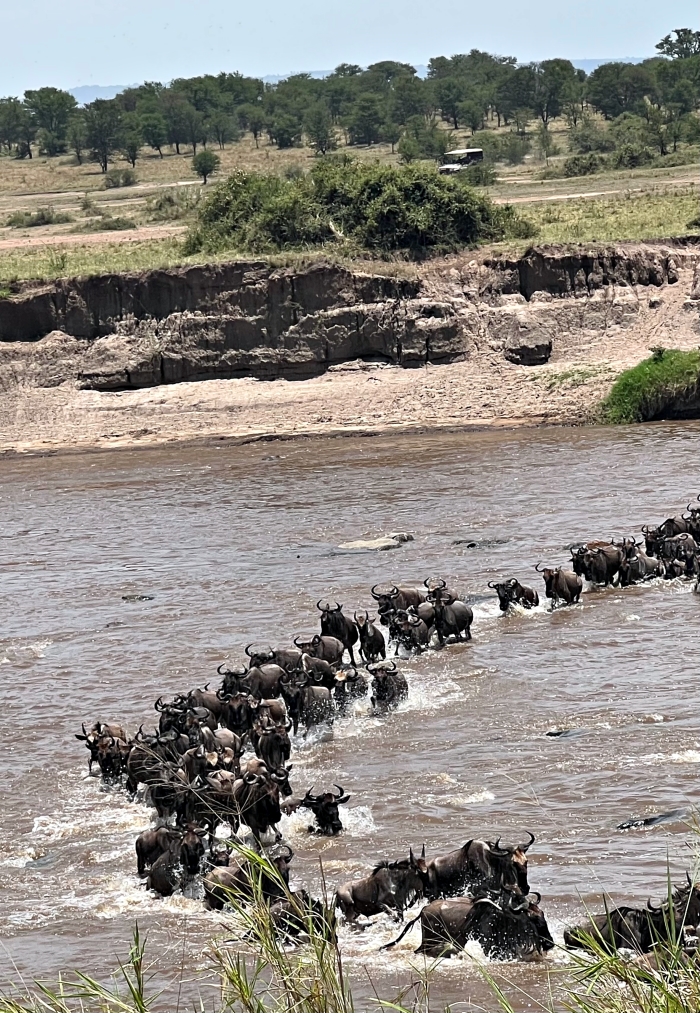
Even the successful river crossings are crazy as it’s every beast for oneself getting across. With the two successful crossings I saw, there were no crocodiles in the water at the time but once most of the herd had crossed, I saw at least three different wildebeest moms come back towards the river to look for their calves which they lost during the crossing. Since there were no crocodiles, I assume that all made it across the river but because the crossings are so chaotic, the moms and calves must have gotten separated so the calves must be on the other side somewhere. I felt really bad for these wildebeest moms but as my safari guide Leo mentioned, that’s nature.
Later on in my safari when I was on the balloon flight over a river, I did see a few dead young wildebeest on the rocks in the middle of the water. There could have been a chance that the lost calves suffered the same fate as these dead ones who probably got swept away by faster deep currents. Again, that’s nature.
River Crossings Caught On Video
There are several known areas along the rivers in the north Serengeti where crossings are likely to happen. A great thing is that the safari guides all share intel even if they are working for different tour companies. They all cooperate and report where along the river masses of animals are gathered since it’s likely there could be actual crossings there.
In our case, we got to our first river crossing just as it was starting and managed to get a great front view resulting in spectacular video and photos. We were close enough to capture sound as well and this was the first time hearing the wildebeest since they are usually pretty quiet whenever we drove past them in the fields (this first river crossing occurred before my first night hearing them at my camp lodge). After our vantage point overlooking the river, we drove further inland to follow the herd and they kept running much like a stampede for quite awhile before settling back down again. Probably too much excitement from the actual river crossing and they just needed to run a bit more before calming down.
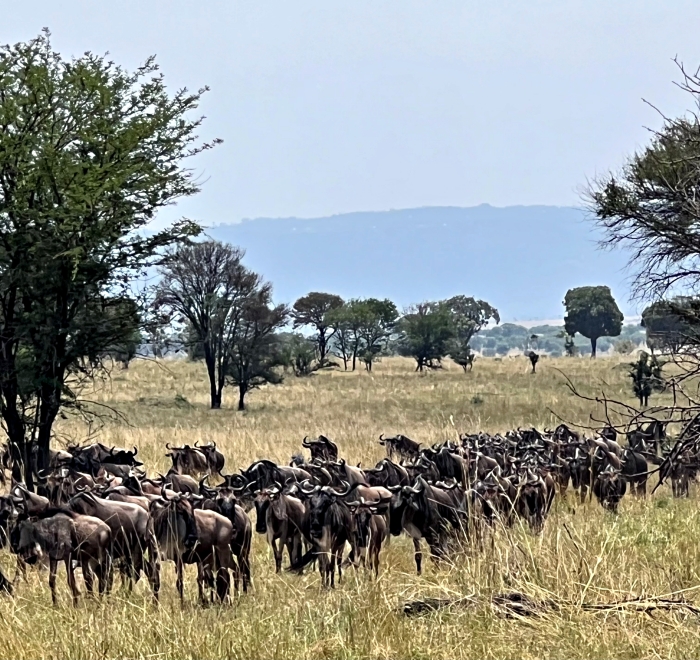
The next sighting was the aborted one where they just couldn’t decide whether to cross or not and just ended up retreating back up the slope. Like I mentioned before, this was still a very disorderly event. I did see several zebras which I got on video too but these decided not to cross the river.
These river crossings are such a popular event during the Great Migration that any reports of herds gathering result in large groups of safari vehicles coming to section of the river where crossings might happen. I spoke to other guests in vehicles parked beside us and some reported that they have been waiting there for hours. So we were quite lucky to see the first river crossing just as it was happening.
The second successful river crossing we saw was the next day following my balloon safari flight. It was with a smaller herd but this one was indecisive as it bounced between two separate sections of the river for a long time. We actually waited for two hours sometimes driving back and forth between the these two sections of the river hoping that the herd will finally make a decision.
I did catch on video when a single wildebeest actually jumped into the river and crossed. Funny thing is that others were not following behind just yet as this single gnu made it all the way across on its own. It was only after that when others finally decided to follow and cross the river. We were a bit farther compared to the first crossing so weren’t able to capture any sound.
One group of guests parked next to us told me that they waited for six hours for this second crossing to happen. My safari guide Leo said I was very lucky to see two successful river crossings during my safari and I’m so glad that I got both captured on video to share with everyone. These Great Migration river crossings are no doubt one of the main highlights of my African safari and will be experiences I will never forget.